Wednesday, September 15, 2010

Harajuku Fashion - Tokyo


Harajuku Tokyo is a world-renowned as a center of Japanese street fashion. It is also a fashion capital of the world which is renowned for its unique street fashion  and many of the world’s top fashion designers on a regular basis Harajuku fashion pilgrimage to find new inspiration.  
 Teenage engage in cosplay ("costume play"), dressed up in crazy costumes to resemble anime characters, punk musicians, etc. The fashion styles of these youths rarely conform to one particular style and are usually a mesh of many. Most young people gather on Jingu Bridge, which is a pedestrian bridge that connects Harajuku to the neighboring Meiji Shrine area. Every Sunday, young people dressed in a variety of styles including gothic lolita, visual kei, and decora, as well as cosplayers spend the day in Harajuku socializing.


Harajuku Takeshita Doori in check-out, quiet area, located across the street from Harajuku station filled with fashion boutiques, food stalls, and many people see opportunities.


Ueno - Tokyo

Adjacent to the Ueno station,  is the Ueno park, the Ueno Zoo and a concentration of Japan's best museums. 


Shinobazu Pond, adjacent to Ueno Park, is full of water lilies and waterfowl and has the picturesque little Bentendō Hall shrine, dedicated to the goddess Benzaiten, in the middle.  


 Ameyoko is a packed shopping bazaar full of stalls selling almost everything.


Tuesday, September 14, 2010

Senso-ji (Asakusa Kannon) Temple - Tokyo

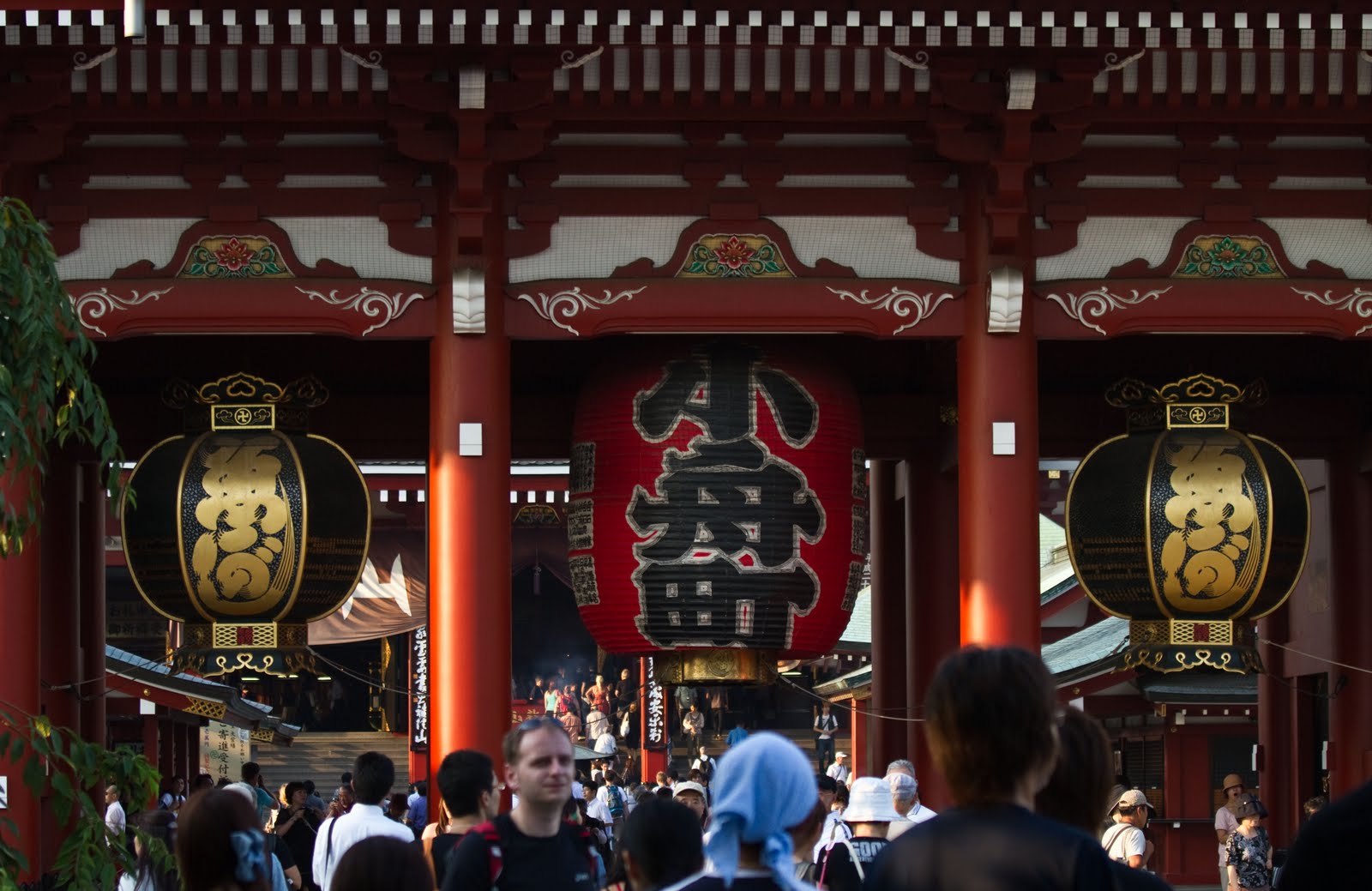
Senso-ji temple is an ancient Buddhist temple located in Asakusa, a central part of downtown Tokyo. It is very close to Asakusa Station. Sensoji entrance (Thunder Gate)  features a massive paper lantern dramatically painted in vivid red-and-black tones to suggest thunderclouds and lightning.


 A shopping street of over 200 meters, called Nakamise, leads from the outer gate to the temple's second gate, the Hozomon (Treasure-House Gate) Shops in Nakamise The first story houses two statues, three lanterns and two large sandals. It stands 22.7 metres (74 ft) tall, 21 metres (69 ft) wide, and 8 metres (26 ft) deep.


The front of the temple forecourt is an incense burner. Here you will usually see a group of visitors fanning smoke from the burning incense over themselves. The incense is believed to have healing powers, and so fanning the smoke over your ailment will help to heal it. If you suffer from headache, fan some of the smoke over your head. 


Sensoji temple Fanning


Praying.....


At all Shinto shrines and temples, worshipers and casual visitors are asked to purify themselves (Harai) of impurity before praying to the Shinto deities. The act of cleansing is called Misogi, and the actual washing of hands and mouth with water is called Temizu.


Sensō-ji's main hall ......


 If you pay 100 yen will buy you an omikuji (fortune written on a small piece of paper). You place the money in an honour box and shake a small cylinder containing sticks with numbers written on them. Shake the cylinder until one of the sticks falls out and pull your fortune from a drawer with the corresponding number. If your fortune is bad, tie the paper onto a nearby string so that the wind can disperse the bad luck. 


To the left of the forecourt and forming part of the temple, is the 5 story (53 meter) pagoda which is believed to have some treasured sutras. Yes these are sutras from India but I could not check it as it was not open to public.


 Sumida river, Azuma bridge and you can see also a unusual black building with a golden carrot on the top.


Saturday, August 7, 2010

Sarawak Regatta 2010

The Sarawak Regatta is an annual event held at the Kuching Waterfront at the Sarawak River. This year Sarawak Regatta was held from 30th July till 1st August 2010. Regatta means a boat race and the tradition of holding the annual Regatta in the Sarawak River continued through the Colonial period and into the post-Malaysia period. According to the Sarawak Gazette, the Sarawak Regatta, touted as one of the state’s premier events, was first held on February 29, 1872, at the Sarawak River fronting the Astana.


This year I watched the Regatta from less crowded area which is 200M from the race start line, located near the Riverine condo, Jalan Petanak.